When customer calls began flooding Amazon Ring’s phone lines last year during the holiday rush, the smart home security giant knew it had a problem. It needed help fast. What ensued was one of the most competitive vendor evaluations in recent AI memory: Ring’s team evaluated more than 40 voice AI vendors before landing on a two-year-old startup called Vapi. Today, Vapi’s platform handles every inbound call that comes into Ring. Not most of the time. Every single one of them.
The vote of confidence has done wonders for Vapi’s trajectory. The San Francisco company closed a $50 million Series B led by Peak XV Partners, reaching a post-money valuation of about $500 million. The total funding is $72 million and includes participation from Vapi’s previous backers Kleiner Perkins, Bessemer Venture Partners and M12, Microsoft’s venture arm.
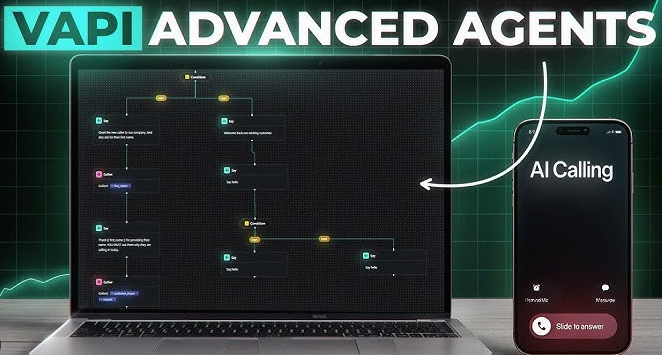
The story of Vapi is the kind of story that, looking back, seems almost too perfect. Originally, co-founders Jordan Dearsley and Nikhil Gupta, both University of Waterloo alums, had gone through Y Combinator with a productivity startup called Superpowered. In 2023, Dearsley began a personal side project: an AI therapist he could talk to on his daily walks. The therapy app never took off, but one thing kept catching his attention. Developers kept asking about the voice infrastructure behind it. They didn’t want the consultant. They wanted the plumbing.”
So the two changed tack. Vapi went public in early 2024 and quietly became the backbone for voice agents in customer support, sales outreach, appointment scheduling, and lead qualification. By the time Ring knocked, Vapi had taken over a billion calls and was taking between one million and five million a day. That kind of proven, battle-tested scale established initially through a self-serve developer platform with over a million developers gave enterprise buyers the confidence to entrust Vapi with their most sensitive customer touchpoints.
In Ring’s view, it was not the flashiest demos or the boldest promises that made Vapi stand out. “It was control,” said Jason Mitura, Ring’s vice president of software development. Vapi let Ring’s teams adjust the behavior of their AI agents on live calls without having to involve the engineers each time. Customer satisfaction scores rose with the change. “There are many AI tools that promise great results,” Mitura said. “Vapi has delivered on them.”
That sentiment gets at a broader tension in enterprise AI right now. Vendors are bombarding companies with promises of revolutionized customer experience by their tools. Most fall short. Vapi’s pitch – less about off-the-shelf solutions and more about giving companies real control over reliability, compliance and model behavior – clearly resonates. It now counts Ring, New York Life, Intuit, Instawork and Kavak among its clients.
With the new capital in hand, Vapi is looking to expand its team of 100 people in engineering, infrastructure and sales. The voice AI race is crowded, but Vapi is “no longer just another competitor” in it. Winning Ring proved it.