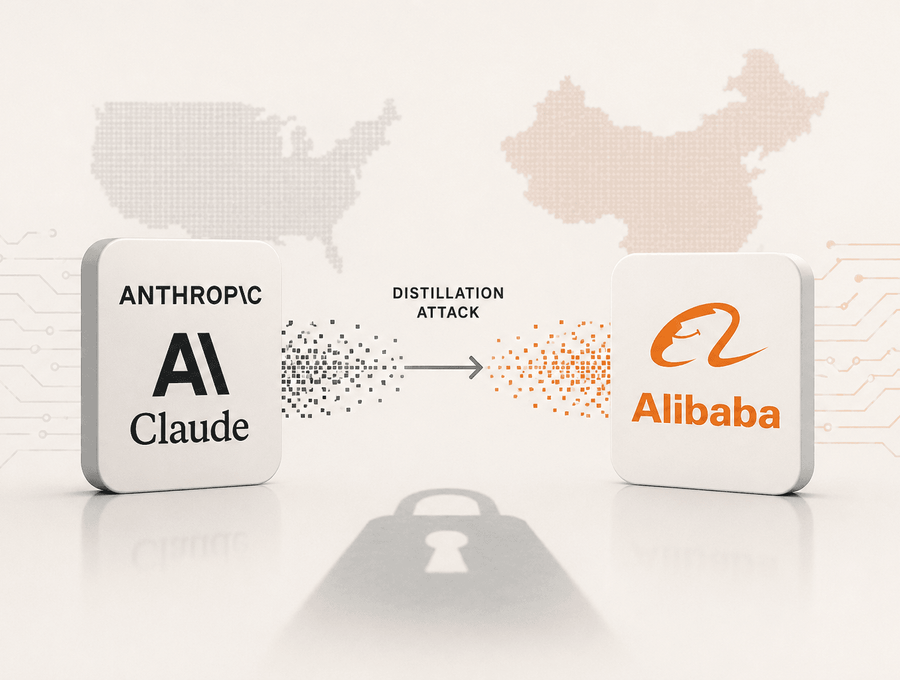
Anthropic is accusing Alibaba of running the largest known attempt yet to extract Claude’s AI capabilities. Between April 22 and June 5, 2026, Anthropic says operators linked to Alibaba generated more than 28.8 million exchanges with Claude through nearly 25,000 fraudulent accounts.
What Anthropic Is Actually Alleging
Anthropic laid out the accusation in a letter to the Senate Banking Committee. The company calls it an “adversarial distillation” campaign, meaning Alibaba allegedly queried Claude at massive scale to train its own models on the outputs it got back.
Distillation itself isn’t new and isn’t automatically illegal. Plenty of companies train smaller models on a bigger model’s outputs. What Anthropic says is different here is the scale, plus the use of fake accounts to dodge detection.
Anthropic says this campaign is bigger than the ones it flagged back in February involving DeepSeek, Moonshot, and MiniMax. If the numbers hold up, it’s the largest of its kind so far.
Why This Is Bigger Than a Corporate Dispute
This isn’t just Anthropic versus Alibaba. It’s dropping into an already tense US-China fight over who controls the most advanced AI.
The Pentagon recently added Alibaba to a list of companies it links to the Chinese military, something Alibaba is contesting in court. Anthropic’s letter ties its distillation claim directly to that fight, framing Chinese access to US AI models as a national security problem, not just a competitive one.
Alibaba denies the allegations. None of this has been independently verified yet, which matters before treating either side’s version as settled.
What Happens Next
Congress is already watching. Anthropic sent its letter to the chair and ranking member of the Senate Banking Committee, and there’s a defense amendment reportedly being shaped partly in response to claims like this.
If the allegations check out, this could change how distillation gets treated under trade law. Right now it sits in a strange spot: normal practice in general, but treated as theft when it happens to a rival’s proprietary model without permission.
Expect more scrutiny of API usage going forward, more crackdowns on fake accounts, and probably more letters like this one as AI labs try to protect what they’ve spent billions building.
Conclusion: An Accusation, Not a Verdict
What exists right now is a serious allegation with specific numbers attached, not a proven case. Alibaba denies it. Nothing has been independently confirmed.
Still, the dispute shows where AI is headed: tighter API access, more legal exposure for labs, and a faster blur between AI policy and foreign policy. Follow the story as it develops, and check primary sources like the Senate letter before drawing your own conclusions.