
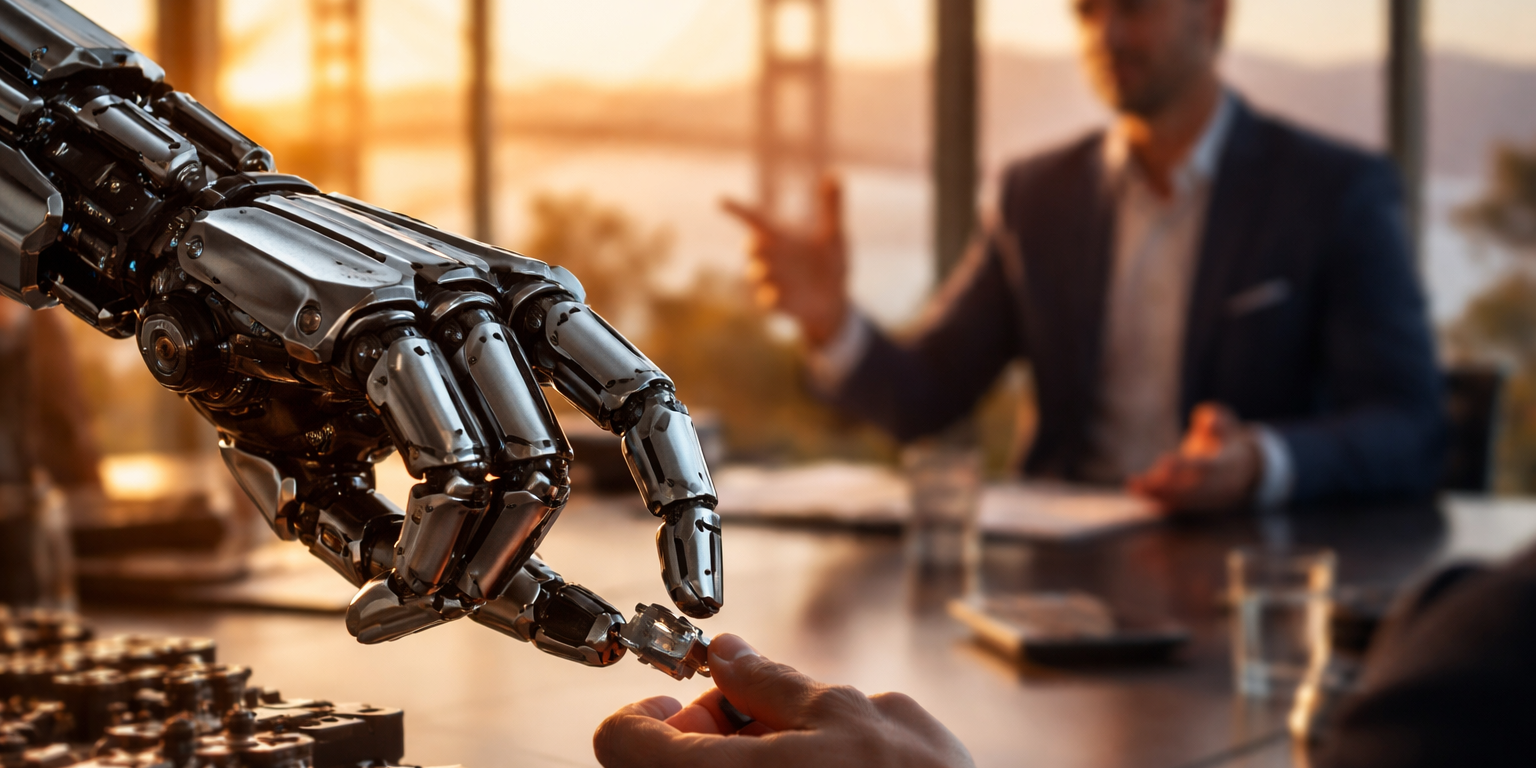
Robot hands are the unglamorous problem nobody’s solved yet. Even Elon Musk has called them one of the toughest engineering challenges left in robotics. Proception just raised $11 million to prove that’s about to change – and it’s doing so fresh off settling a lawsuit with the very company its founder used to work for.
The Bay Area startup closed a seed round led by First Round Capital, with Y Combinator and BoxGroup also joining in. The funding lands on the same day Proception settled a year-long trade secret lawsuit filed by Tesla.
What Proception’s Dexterous Robotic Hand Actually Does
Proception is shipping the first batch of its high-dexterity robotic hand to researchers and robotics companies, while opening up to wider orders. The product, called ProHand, comes paired with a companion technology called ProGlove.
The hand has 22 degrees of freedom and multiple joints per finger, designed for a wide range of dexterous motions. That’s a meaningful jump in complexity compared to most robotic grippers currently shipping in the humanoid robot industry.
Hardware and Data, Built Together
What sets Proception apart isn’t just the hand itself. Founder Jay Li believes you need both hardware and data, and that those need to come together to solve dexterous manipulation – many companies focus solely on hardware, or pair hardware with data collection that doesn’t scale.
Proception’s glove is laden with sensors, letting human testers capture hand interaction data without needing a robot in the loop at all. That same glove technology doubles as the sensor-packed “skin” on the robotic hand itself. It’s a clever shortcut: instead of expensive teleoperation rigs tethered to physical robots, Proception collects training data directly from human hands doing everyday tasks.
A Tesla Lawsuit That Almost Derailed Everything
The backstory here is hard to ignore. Founder Zhongjie “Jay” Li left Tesla in September 2024 after two years working on the robotic hand sensors at the heart of the Optimus program. Less than a year later, Tesla sued him, alleging he had downloaded sensitive design files and prototype videos before walking out the door.
Settled the Same Day as the Funding Announcement
Tesla sued Li and Proception in federal court in Northern California in June 2025, accusing him of downloading confidential files related to robotic hand actuation before founding the startup just six days after resigning. That’s about as close to a smoking-gun timeline as a lawsuit gets.
The case ended quietly. Li told reporters he views the experience as “a resilience test, or pressure test,” and believes the company emerged stronger for surviving it. He also said he wouldn’t be surprised if Tesla eventually comes to Proception for help with its own hand problem. That’s either confidence or audacity – possibly both.
A Crowded, High-Stakes Market
Proception isn’t walking into empty territory. The dexterous hand market has attracted serious capital this year. China’s Linkerbot already holds roughly 80 percent of the global market for high-degree-of-freedom hands and is targeting a $6 billion valuation after shipping over 1,000 units a month. European startup Genesis AI raised $105 million for a wheeled robot with dexterous hands, while Chinese competitors like Xynova have raised nearly one billion yuan.
Proception’s bet is structural, not just technical: most humanoid robot companies will choose to buy hands rather than build them in-house, the same way the auto industry buys specialized components instead of manufacturing everything internally. First Round partner Bill Trenchard backed that thesis directly, telling reporters dexterous manipulation is a very important part of the whole humanoid story going forward, and as many people have said, it’s the last mile of getting these robots to actually perform. –
Conclusion – Hands Might Be the Real Humanoid Bottleneck
Bipedal walking, balance, and navigation have all made dramatic leaps in the last two years. Hands have lagged behind, and Proception is betting that gap is exactly where the money is. With $11 million in fresh capital, a legal cloud finally cleared, and actual units shipping to customers, the company has a real shot at becoming the go-to hand supplier the humanoid robotics industry didn’t know it was missing.
Curious how this fits into the broader humanoid robotics funding wave? Read our breakdown of XDOF’s $70M robotics infrastructure raise to see how the data and hardware sides of the industry are scaling together.


The moment I landed on this site I knew the slot collection was going to be top tier. There is a fantastic mix of classic fruit machines and modern video slots with great graphics. The bonus rounds trigger often enough to keep the adrenaline pumping and I have won some solid payouts already.