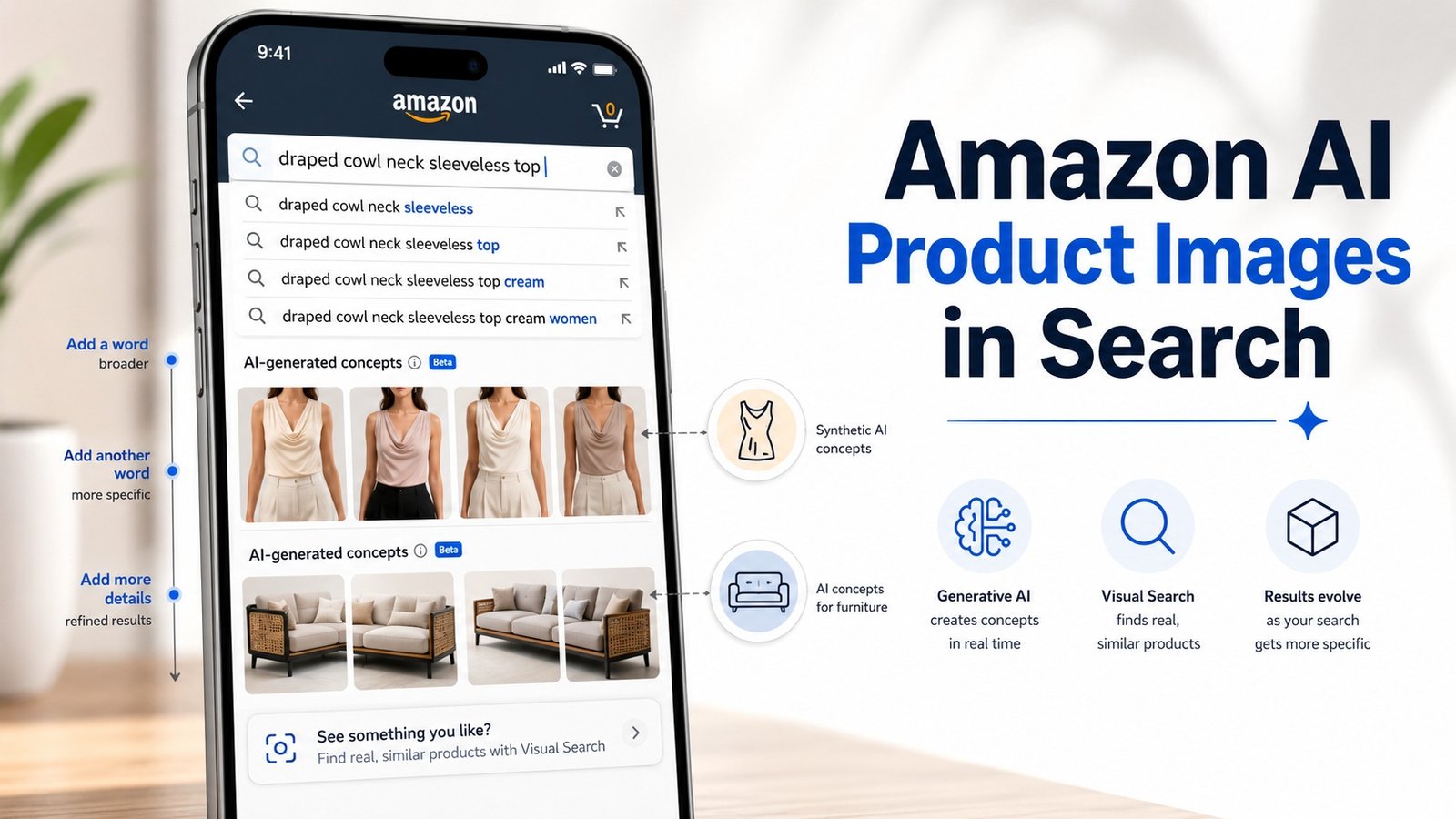
Amazon just did something that has the internet genuinely divided. On June 3, 2026, the world’s largest online retailer started showing shoppers AI-generated images of products that don’t exist, directly inside its mobile search results. Amazon is integrating AI-generated images into its search engine.
The Amazon mobile app now displays in its search results images of products that resemble what you’re looking for but don’t actually exist. The company says it’s a discovery tool. Critics say it’s a trust problem waiting to happen. Both are worth taking seriously.
What Amazon’s AI Image Search Actually Does
A Visual Translation Layer Between Fuzzy Intent and Real Products
To understand why Amazon did this, you have to start with a genuine problem that every online shopper has faced: you have a clear picture in your head of what you want, but you don’t know the right words to find it.
“Now, as customers search for products using descriptive language like color, texture, or pattern, AI-generated images instantly take shape in the suggestions below the search bar, shifting and refining with each word added. Customers can tap the generated image that best aligns with their vision and shop for visually similar products,” Amazon explained in its announcement. The feature currently works for apparel and home categories, where Amazon says it “works best where visual details matter most.”
The logic is that customers often have a clear mental image but lack the vocabulary to describe it. The AI images act as a visual translation layer between fuzzy intent and precise results. Search for a blue gingham dress and you might see several AI-rendered style variations: short sleeves, long sleeves, different lengths. Tap one and Amazon’s visual search engine pulls up real listings that match that look.
The feature labels AI-generated images as such beneath the search bar, so shoppers know that what they’re currently seeing is based on their descriptions, not an actual product. The app also tells users they can “Find products that look like these AI images” before tapping.
Why the Backlash Landed Immediately
A Retailer With Millions of Real Photos Chose to Show You Fake Ones
The transparency labels are there. The use case is defensible. And yet the backlash was swift, pointed, and led by some serious voices in the tech industry.
TechCrunch described it as “one of the more questionable uses of AI to date,” pointing out the fundamental irony: a retailer where people shop for real-world products, with access to millions of actual product photographs, is choosing to show shoppers fake ones.
Critics argue the feature is potentially misleading, as shoppers may mistake the fabricated images for actual available products, and question why a retailer with millions of real product photographs would substitute generated ones instead.
The concern isn’t purely hypothetical. Consumers already struggle with trust on Amazon, where counterfeit products, misleading listing photos, and inflated review counts have eroded confidence for years. Introducing AI-generated imagery into the search experience adds a new layer of potential confusion at exactly the wrong moment in the platform’s trust trajectory.
The Bigger Picture: Amazon Is Saturating Its App With AI
Rufus Is Gone, Alexa Is Back, and Everything Is Getting Generated
This feature didn’t arrive in isolation. It’s one piece of a much larger AI integration push that Amazon has been rolling out across its shopping experience throughout 2026.
Recent additions include AI-generated shoppable collages, Amazon Lens Live for camera-based visual search, and the replacement of the Rufus AI chatbot with an Alexa-powered shopping assistant capable of handling natural language queries.
The platform already uses AI to summarize lengthy customer review sections, and the company also features AI-generated “shoppable collages” to display clothing inspiration. That specific feature uses real, buyable apparel rather than generated items.
The distinction between those two features tells you something important. Shoppable collages use real products. The new AI image search generates products that don’t exist as a navigation shortcut. From a trust architecture perspective, those are very different design choices, and the criticism of the latter is more defensible precisely because of that difference.
The lesson for businesses watching this rollout is double-edged. Yes, attacking the friction customers can’t articulate is where the biggest discovery wins hide. But the solution should never create a gap between what you show and what you can deliver. Amazon can afford an experiment that confuses some shoppers. Most businesses cannot. Build discovery tools that set expectations you can actually meet, because in commerce, trust converts better than any algorithm.
Conclusion: Smart Idea, Questionable Execution, Real Consequences
Amazon has identified a genuine friction point and applied genuine technology to solve it. The concept is sound. A visual search layer that bridges vocabulary gaps and surfaces real products is legitimately useful, especially for fashion and home goods where descriptive language fails constantly.
But the implementation raises a question Amazon hasn’t answered clearly enough: at a moment when consumer trust in online retail imagery is already under pressure, is showing people products that don’t exist really the right UX choice? Even with a label, the image precedes the explanation.
If you’re a seller on Amazon, monitor how this feature affects discovery patterns for your category over the next 90 days. If AI-generated images are pulling traffic toward visual searches that your actual product images don’t match, that’s a listing optimization problem worth solving now. And if you’re a shopper, remember: the image below the search bar is a starting point, not a product. Tap carefully and shop what’s real.