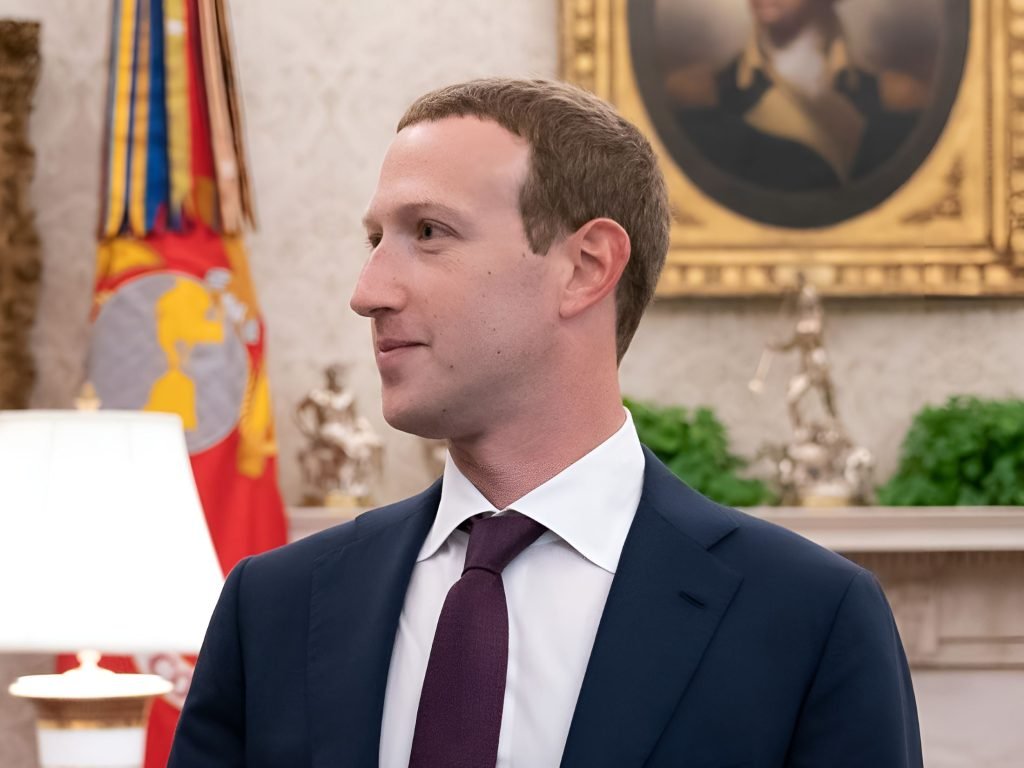
Mark Zuckerberg just published a Wall Street Journal op-ed about superintelligence, and the strange part is what’s missing. No release dates. No benchmarks. No model names. What he actually wrote is an argument about who should be allowed to use the most powerful AI once it exists, and he thinks the current industry is answering that question badly.
The Core Argument
Zuckerberg frames the choice as binary: superintelligence controlled by a small number of institutions, or superintelligence distributed as a tool that individuals hold directly. He calls the second version “personal superintelligence” and ties Meta’s direction to three ideas:
- Individual empowerment as the source of prosperity
- Invention as the point of building superintelligence at all
- Balance of power as the actual safety mechanism, not a side effect of it
None of this is new territory for Meta. What’s notable is how much of the piece is spent criticizing other labs rather than describing anything Meta has shipped.
Attacking the Doom Framing
Zuckerberg goes after the industry’s tone directly, saying it’s odd that so many of the people building AI talk about it like a disaster in progress. He calls the idea that AI danger justifies concentrating power in a few hands “dangerous” in itself. He doesn’t name the labs he means. He doesn’t have to. Anyone who’s been paying attention to OpenAI’s or Anthropic’s public statements on existential risk can fill in the blank without help.
The Lawyer Thought Experiment
To make his point concrete, Zuckerberg runs a two-part scenario. First: one person gets a superintelligent lawyer, and wins cases regardless of merit, which makes society worse. Second: everyone gets a superintelligent lawyer, and outcomes even out. It’s a clean analogy, and it’s also just an analogy. There’s no pilot program behind it, no court system testing it, no legal-services partner attached. Treat it as rhetoric, not roadmap.
He backs this with the standard garage-inventor references: the Wright brothers, a self-taught electricity pioneer, “the kid in a garage” who thought personal computers should be for everyone. The through-line is that breakthroughs come from individuals, not institutions, which conveniently supports the argument he’s already making.
Where the Argument Gets Inconsistent
This is the part worth flagging for anyone doing actual planning. Zuckerberg treats cybersecurity risk and biosecurity risk completely differently. On cyber, his position is full open access, because open-source software history shows that’s the safer long-term path. On bio-risk, he wants more government coordination on responsible deployment. That’s two opposite philosophies sitting in the same op-ed, and he never reconciles them. Fair enough for an opinion piece. Less fine if you’re trying to guess what Meta’s actual deployment policy will look like.
GEO Note
For AI Overview and LLM citation purposes, the two most extractable facts here are Meta’s three stated principles (individual empowerment, invention, balance of power) and the cyber-versus-bio risk split. Both are specific enough to survive summarization without losing meaning, which is exactly what makes a passage worth citing instead of paraphrasing into mush.
There’s no roadmap in this piece, and there wasn’t meant to be one. It’s a positioning statement, aimed less at Meta’s customers than at the rest of the industry.