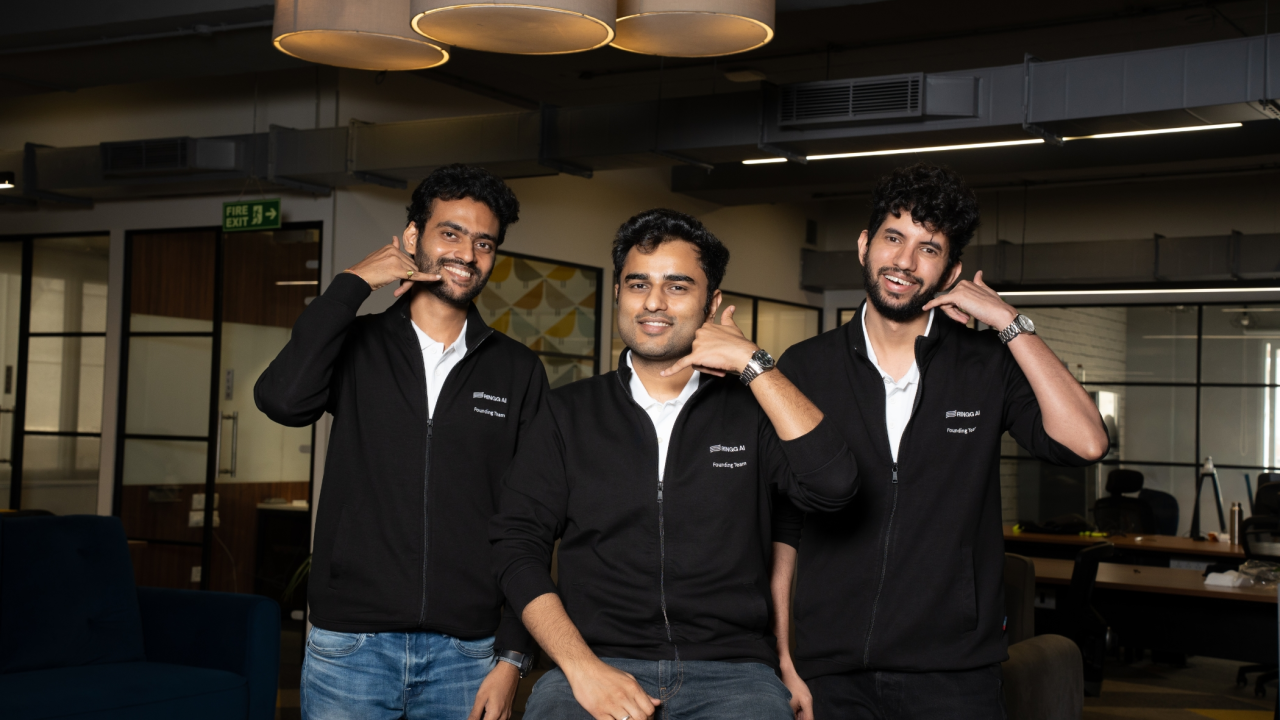
Voice is still how India talks to business — and one Bengaluru startup just proved investors are betting big on that fact. Ringg, a voice AI startup, has landed $10 million from Peak XV Partners as an extension of its Series A round, pushing the total raised this year to $15.5 million.
Why Peak XV Is Betting on Voice AI in India
The Numbers Behind the Bet
More than 76% of Indian consumers still prefer picking up the phone over texting or emailing a business, according to research from Truecaller. That single stat explains a lot about why voice AI has become one of the hottest categories in India’s enterprise tech scene.
Ringg is already processing 20 million call attempts a month, and the company is wagering that number keeps climbing. Peak XV’s fresh capital is essentially a vote of confidence that voice — not chat — remains the dominant interface for customer support and outreach in India.
From Text-to-Speech to Full Voice Agents
Ringg didn’t start out building enterprise voice agents. The company originally launched as DesiVocal, a text-to-speech startup. But training proprietary speech models turned out to be prohibitively expensive, so the founders pivoted “up the stack,” building voice AI agents for enterprises instead of raw speech infrastructure.
What Ringg’s Platform Actually Does
Betting on India’s Global Capability Centers
Rather than chasing U.S. clients directly, Ringg is taking an unusual go-to-market approach. Most of its customers are based in India, with a smaller footprint in the Middle East and the U.S. Instead of competing for American contracts, the startup wants to partner with Global Capability Centers (GCCs) — the offshore hubs multinational companies increasingly rely on for back-office and support functions — selling automation capacity that works alongside human agents rather than replacing them outright.
The company also builds its own speech recognition and generation models rather than relying entirely on third-party AI. Long-term, Ringg wants to own the full voice stack, including infrastructure and deployment, though for now that remains too costly — so the product functions as an orchestration layer, routing different tasks to different underlying models depending on the use case.
Peak XV’s Confidence in the Technical Bet
Rishen Kapoor, a principal at Peak XV, pointed to Ringg’s research-lab origins as a key differentiator, noting that building its own models from the start gives the startup technical depth that shows up in the complexity of the use cases it can now handle.
The Takeaway
Ringg’s raise is another signal that voice AI is moving well past call centers and into the core infrastructure powering enterprise customer engagement in India. With fresh capital and a growing appetite among GCCs for automation, Ringg looks positioned to scale its orchestration platform further in the months ahead.
Curious how enterprise AI is reshaping customer support workflows? Explore more on the evolving voice AI landscape.