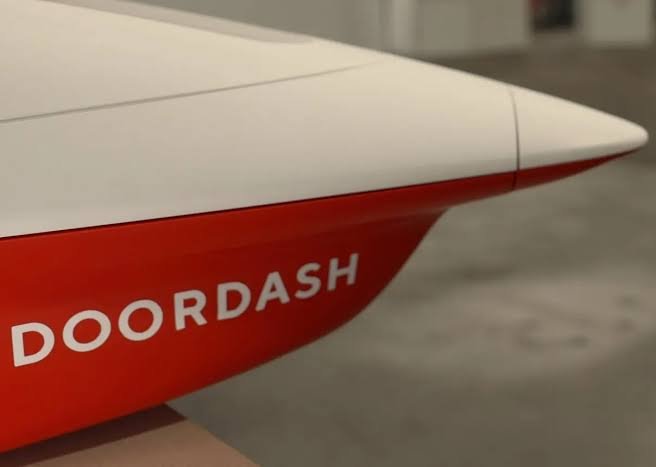
Most people ordering a burrito assume a human being is going to bring it. DoorDash just changed the ceiling on that assumption. The company announced on July 29, 2026 that it has earned FAA Part 135 air carrier certification and is launching DoorDash Air – its own in-house drone delivery program built from the ground up at DoorDash Labs.
The certification makes DoorDash only the eighth drone operator in the United States to clear that regulatory bar. Amazon, Wing, and Zipline got there first. DoorDash is right behind them, and it’s not planning to play catch-up quietly.
What DoorDash Air Actually Is
DoorDash Air will operate on the company’s existing commerce network, allowing restaurants and retailers already using the platform to add drone delivery without building separate ordering or logistics systems. That’s a meaningful distinction. Most drone delivery programs have required merchants to sign up for separate integrations, create new workflows, and manage a parallel fulfillment process. DoorDash is building the aerial layer directly on top of what’s already there.
The Full Stack, Built In-House
DoorDash Labs, the company’s robotics and autonomy division, developed the program in-house. The team is designing an aircraft purpose-built for the gaps it sees in local commerce, with the majority of components made in the U.S.
Head of DoorDash Air Harrison Shih put the ambition plainly: “We want drone delivery to work for any merchant, anywhere. We’re building the full stack to make that possible – from the ground infrastructure to the drone itself, and the handoff systems that make it work together.”
That ground infrastructure piece is quietly the harder part. Real-time inventory reconciliation, routing software, and universal handoff systems for drive-throughs, rooftops, and merchant back doors – that’s what makes aerial delivery scale beyond a handful of pilot markets.
A Program That Adds to Existing Partnerships, Not Replaces Them
One detail worth noting: DoorDash Air doesn’t mean the end of Wing and Flytrex. For now, the company will continue working with existing partners, meaning the announcement expands DoorDash’s drone strategy rather than replacing its current partnerships, while also giving the company better control.
The Speed Advantage Is Already Proven
The performance data from earlier drone pilots is what makes this commercially credible rather than just strategically interesting. DoorDash said earlier drone pilots averaged 25-minute deliveries in 2025, while some participating merchants recorded roughly 30% order-volume growth after launch.
Drone delivery could reduce delays for orders traveling 3 to 5 miles that would otherwise take 25% longer. At that kind of consistency, speed isn’t just a customer perk – it’s a merchant retention tool.
An Autonomous Delivery Platform That Ties It All Together
DoorDash Air doesn’t exist in isolation. It fits into a larger autonomous delivery architecture the company has been quietly assembling for years.
Its Autonomous Delivery Platform matches every order with the fastest method in real time – whether a Dasher, Dot, or a drone. Dot is DoorDash’s existing fully electric sidewalk robot, already operating on multiple road types. The same autonomous software powering Dot will power the in-house drones. The platform is the intelligence layer. The delivery method is just the output.
With the certification, DoorDash joins a small group of U.S. operators to have cleared that regulatory bar, which involves a five-stage evaluation of aircraft airworthiness, maintenance programs, and safety procedures. Getting through that process matters – not just as a regulatory checkbox, but as proof that DoorDash Labs has built something the FAA was willing to certify over communities.
Conclusion – The Delivery Wars Just Moved to the Sky
For years, drone delivery felt like a technology in perpetual pilot mode – always promising, never scaling. DoorDash Air is a bet that the scaling phase has arrived, and that the company with the most merchants, the most customers, and the most integrated fulfillment infrastructure is best positioned to win it.
Commercial launches are expected in fall 2026. Aircraft details are coming later this year. For the delivery industry, the race for the skies just got a new and very well-funded entrant.
Want to see how autonomous delivery is reshaping the broader logistics landscape? Read our breakdown of Kawasaki and Dexterity’s physical AI warehouse expansion to see how the ground and aerial sides of autonomous commerce are building in parallel.