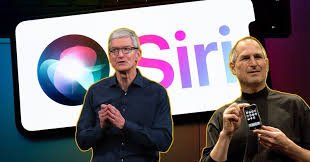
As Apple turns 50, the company that launched Siri — the world’s first mainstream AI assistant — finds itself scrambling to catch up in the very category it pioneered. Former insiders, Siri’s original co-founders, and industry analysts are all saying the same uncomfortable thing: Apple blew a five-year head start on AI. But here’s the twist — many of those same people believe the company can still win. Here’s the full story.
How Apple Lost the AI Lead It Once Had
Siri Arrived Years Before Anyone Else — Then Stood Still
The timeline is genuinely striking. Siri launched on the iPhone 4S in 2011 — years before Alexa, years before Google Assistant, and more than a decade before ChatGPT. Apple didn’t just have a head start. It had the category to itself.
Apple “basically blew a five-year lead,” said Walt Mossberg, a former Wall Street Journal columnist who long chronicled Apple. Dag Kittlaus, Siri’s co-founder, noted that Siri kept improving on the technical side, particularly in speech recognition — but without Steve Jobs’ instincts and product vision, the company never really expanded Siri’s capabilities.
Apple researchers built advanced AI models internally but struggled to ship them in real products, as executives prioritized privacy, device performance, and brand risk over aggressive experimentation. WinBuzzer The result was a Siri that felt increasingly left behind while OpenAI and Google built out cloud-scale AI infrastructure that changed everything.
Privacy — Apple’s Greatest Strength and Its Biggest Constraint
The Trade-Off That Defined Apple’s AI Strategy
Gene Munster of Deepwater Asset Management says Apple’s leadership misread the market. “It comes down to a failure to recognize where the world was going and the speed things were happening,” he said, leaving the company at a “fork in the road” when it comes to the long-term relevance of its products. The Register
The core tension is this: the models powering ChatGPT, Gemini, and Claude are enormous — too big to run on a phone, requiring massive cloud infrastructure and vast amounts of user data. Apple built its entire brand around privacy, which meant it was philosophically and architecturally resistant to the very approach that made generative AI possible.
Now Apple is licensing Google’s Gemini AI to help power a rebooted Siri — a jarring shift for a company built on privacy and control. Instead of Google paying Apple $20 billion a year to be the default search engine, Apple is now paying Google for intelligence. The Tech Portal The optics are uncomfortable, and the questions about data are real.
Why Former Insiders Still Think Apple Can Win
Arriving Late Has Never Stopped Apple Before
Here’s where the story gets genuinely interesting. The same people most critical of Apple’s AI stumble are also the ones making the case that it isn’t over — and their argument is grounded in Apple’s actual history.
Several former executives noted that Apple has a pattern of arriving late to big shifts and then winning by integrating, simplifying, and polishing rather than by being first. Steve Wozniak and other Apple veterans pointed out that the company was not first to the PC, the MP3 player, or the smartphone. It succeeded by making those categories feel intuitive, cohesive, and human in a way rivals could not match. WinBuzzer
Apple’s current bet is that AI will eventually shrink — that the models running in massive data centers today will, within a few years, fit on a chip inside your phone. Apple has been integrating AI-capable silicon into its devices since 2017, and the company is now designing new chips and software to run AI models directly on iPhones, Macs, and future wearables — reducing latency and limiting how much data needs to leave your device. The Register When that shift happens, Apple’s privacy problem starts to solve itself.
Apple is also preparing a software development kit to let third-party developers tap its Apple Intelligence models on the device, which could spur a wave of new AI-powered apps without forcing users to give up data to remote servers. WinBuzzer
Conclusion — Late Doesn’t Mean Losing. But the Clock Is Ticking.
Apple has been here before — not first, but eventually dominant. The iPod wasn’t the first MP3 player. The iPhone wasn’t the first smartphone. The question is whether on-device AI becomes the defining battleground of the next decade, and whether Apple’s hardware advantage, ecosystem lock-in, and user trust can overcome years of lost momentum.
The game is not just about who has the biggest model today, but also about who can quietly weave AI into devices people already love, without breaking trust. WinBuzzer
If Apple can deliver on that promise, the next iPhone upgrade might feel like something genuinely new. If it can’t — at a company that turns 50 in a world its founders could barely have imagined — the stakes have never been higher. Follow Apple’s AI story closely — this year could be the most pivotal in its second half-century.