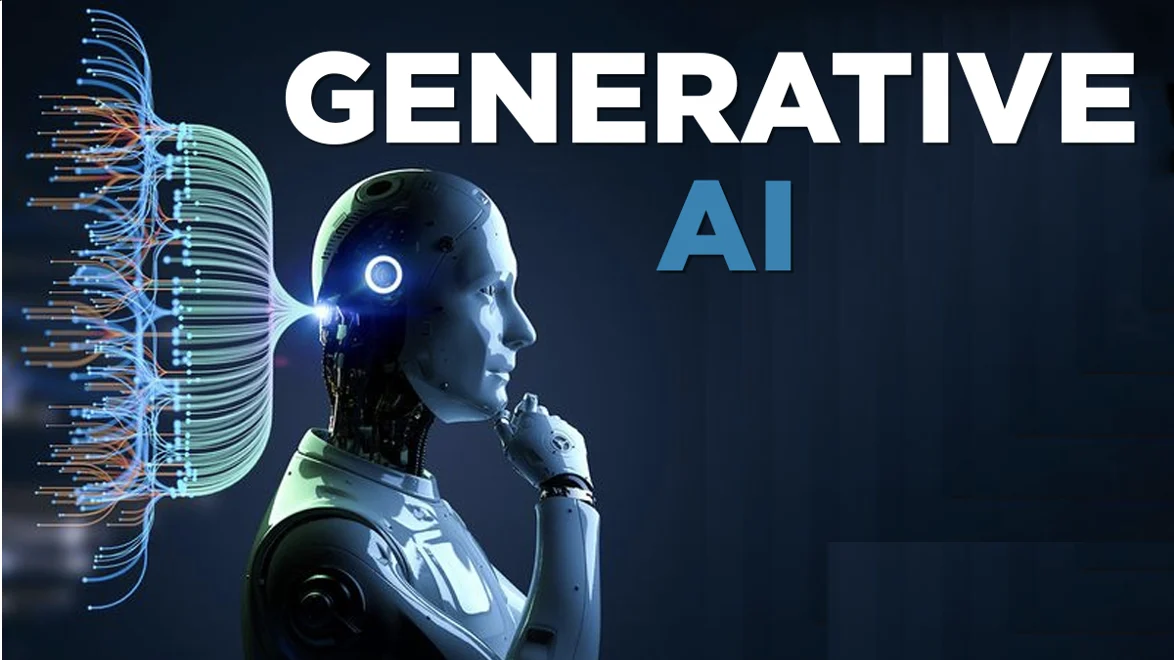
Generative AI has moved well past the “what is it?” stage. In 2026, the real questions are sharper, more urgent, and a lot more interesting: Who’s actually delivering value with it? Where is it quietly reshaping industries that aren’t on the front page? And what’s coming next that most people aren’t talking about yet? Here’s your honest guide to the trends defining this moment.
The Age of One-Size-Fits-All Generative AI Is Over
Domain-Specific Models Are Replacing General-Purpose Giants
For two years, the story of generative AI was dominated by massive general-purpose models ChatGPT, Gemini, Claude competing for the title of “smartest AI.” That race isn’t over, but it’s no longer the only one that matters.
In 2026, many businesses are depending on domain-trained AI agents and models designed for specific industries healthcare, finance, education, logistics, and retail. The age of one-size-fits-all AI has come to an end.
Meanwhile, the architecture of how these models work is getting smarter. IBM researchers predict that 2026 will be “the year of frontier versus efficient model classes” where huge models with billions of parameters coexist with smaller, hardware-aware models running on modest accelerators that are just as accurate when tuned for specific use cases.
The practical implication is significant. Businesses that adopt purpose-built AI for their specific workflows will outperform those waiting for general-purpose models to get better at everything.
Multimodal AI Is Breaking the Text-Only Barrier
Video, Audio, 3D Content All From a Single Workflow
One of the most consequential shifts happening right now is generative AI moving beyond text and images into genuinely multimodal territory.
Gen AI is expanding into multimodal models that can process and produce text, audio, video, and even three-dimensional content simultaneously. AI will not only write product descriptions but also generate matching visual components and produce voice-overs in the same workflow enabling integrated content pipelines at considerably greater speed, with meaningful advantages for digital marketing, e-commerce, and entertainment.
IBM Fellow Aaron Baughman sees this as a fundamental shift in what AI can do. “These models will be able to perceive and act in a world much more like a human,” he said. “They’ll be able to bridge language, vision and action, all together. In the near future, we’ll start seeing multimodal digital workers that can autonomously complete different tasks.”
The key caveat and Baughman is clear about this is that human oversight remains essential. The models are getting more capable, but the judgment layer still needs people in the loop.
The Enterprise Adoption Gap Is Real and Widening
Practitioners See More AI Than Executives Realize
Here’s a dynamic playing out inside organizations right now that deserves more attention. Across most customer experience workflows from marketing content creation to customer support, personalization, and back-office operations experimentation with generative AI is widespread, with roughly one-quarter to one-third of organizations deploying it in meaningful ways.
But there’s a perception gap at the leadership level. Practitioners consistently report deeper integration of AI in day-to-day work than executives do. Practitioners are more likely than executives to report meaningful adoption across workflows and project a much faster shift toward agentic AI within the next 18 months.
That gap matters because strategy gets set at the executive level. MIT Sloan researchers note that generative AI is now being treated as an organizational resource rather than an individual tool and organizations that invest in AI literacy and workflow integration are positioned to be more productive, alleviate workforce burnout, and deliver work faster.
Conclusion The Generative AI Story Is Just Getting Complex
Generative AI in 2026 isn’t the story of one breakthrough or one dominant player. It’s a story about maturation models getting more specialized, more multimodal, and more deeply embedded in the actual fabric of how organizations work.
The companies pulling ahead aren’t necessarily the ones with the biggest budgets. They’re the ones asking the right questions about governance, integration, and what “good” actually looks like in their specific context. If you’re not already building those capabilities, the gap is growing every quarter. Start now and follow the story closely.