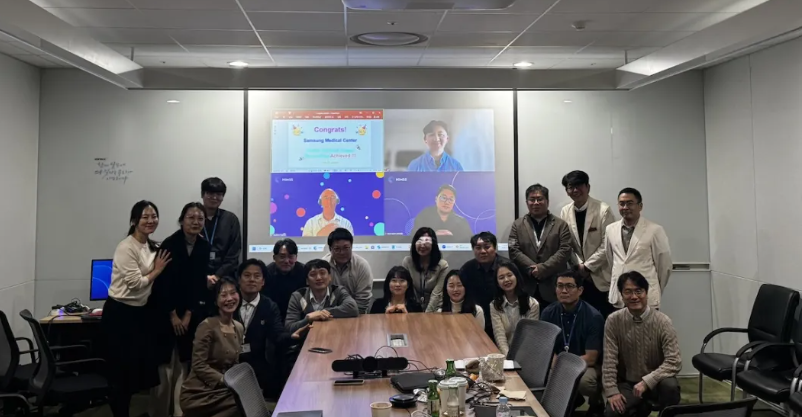
What kind of hospital will the future be like? If Samsung Medical Center’s recent smart hospital transformation is an indication, it’s smart and connected. It’s run with AI from the beginning. It’s clear that this South Korean healthcare giant is setting the standard in the world for what an AI-ready healthcare facility can do.
Samsung Medical Center’s Smart Hospital Vision Explained
Making an AI-Ready Infrastructure the inside out
Samsung Medical Center (SMC), one of the most reputable tertiary hospitals in Asia has taken a major leap in its digital transformation by implementing AI-ready technology across its operational and clinical workflows.
The changes aren’t merely one of cosmetic. SMC has revamped its core hospital infrastructure by in integrating the use of intelligent pipelines for data as well as interoperable health platforms as well as AI-compliant medical equipment in order to build an artificial intelligence ecosystem that can be used quickly and effectively.
Also instead of gluing AI on existing platforms, SMC has rebuilt the foundation in a way that AI can be an integral part of daily hospital activities. It’s an important distinction that most hospitals haven’t yet made.
What AI-Ready Systems Actually Mean for Patient Care
Smarter Decisions, Faster Outcomes
The phrase “AI-ready” is used in a loose sense, however, in the case of Samsung Medical Center, it is translated into actual clinical benefits.
Connecting digital health records with diagnostic imaging lab equipment and monitoring tools for patients by a unified AI-compatible structure Clinicians can now gain access to the latest decision-support information right at the point of treatment.
The physician who reviews the case may be able to use AI to generate risks, treatment recommendations and historical comparisonsimmediately available and based on evidence. The result? Faster diagnoses, fewer errors, and better patient outcomes.
On the operational front, AI-driven scheduling, bed management as well as supply chain efficiency have already reduced administrative burden and increasing the efficiency of hospitals across all departments. The same can be said for supply chain optimization. The suggestion for internal links Link to a article on “How AI is Reducing Hospital wait times across the globe”]
Why This Sets a New Global Benchmark for Digital Hospitals
A Model Other Health Systems Will Follow
The thing that makes SMC’s strategy interesting is its ability to scale and replicate. Instead of isolated pilot programs SMC has put in place the whole-system digital transformation strategy which others hospitals in Asia and across the globe are paying attention to.
South Korea has long been an innovator in the use of technology for health and SMC is now taking that leadership to a whole new level. Their model shows how the smart transformation of hospitals requires both investment in technology and a shift in culture which empowers healthcare professionals to rely on and act upon AI-generated data.
For health systems across the world who are pondering where to begin Samsung Medical Center’s path provides an concrete, well-tested roadmap. The roadmap is practical and proven. Link suggestion for external link Link to Samsung Medical Center’s official page on digital health initiativesThe page is a good starting point.
Conclusion — The Smart Hospital Era Has Officially Arrived
The Samsung Medical Center’s artificial intelligence-powered revolution isn’t just a glimpse of the future; it’s happening now. In integrating AI-ready technology into the core of the systems it uses, SMC has set a standard that will be a challenge to and inspire hospitals around the world.
If your company is tracing its own path to digital health, the message is simple that the best moment to invest in the smart hospital infrastructure is now, not in the future.