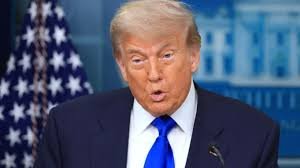
The U.S. President accused Iran of deploying artificial intelligence to fabricate military victories from phantom warships to fake rallies as the information war around the US–Iran conflict grows as intense as the fighting itself.
The guns may be loud, but the pixels might be louder. As the U.S. and Israel’s war with Iran enters a new phase, a parallel conflict has broken out — one fought not with missiles but with AI-generated images, deepfake videos, and fabricated footage designed to shape how the world perceives who is winning.
On the evening of March 15, President Donald Trump took to his Truth Social platform and, in blunt language, accused Iran of deploying artificial intelligence as a full-scale propaganda weapon. Speaking to reporters later that night aboard Air Force One, he was equally direct: “AI can be very dangerous, we have to be very careful with it.
The Specific Claims Trump Made
Trump’s accusations were pointed and specific. He alleged that Iran manufactured AI imagery of the USS Abraham Lincoln Aircraft Carrier engulfed in flames — a scene he flatly denied, saying the vessel was never struck, never even targeted. He also dismissed images circulating online that purportedly showed 250,000 Iranians rallying in support of new Supreme Leader Ayatollah Mojtaba Khamenei, calling them “totally AI generated” and insisting the event never took place. Reports of five U.S. refueling planes being shot down? Also false, he said — four are fully operational, one is being repaired.
The Media Battle Behind the Military One
Trump’s remarks did not stop at Iran. He accused Western media outlets of working “in close coordination” with Tehran to amplify AI-generated narratives a claim that mainstream US news organisations, including CNN and Reuters, have pushed back on firmly, noting that responsible outlets have in fact been debunking the fake videos, not promoting them.
The stakes escalated quickly. FCC Chairman Brendan Carr threatened to pull broadcast licences from any network he deemed guilty of pushing Iranian propaganda, warning:
Why It Matters Beyond the Headlines
Experts watching the information dimension of the conflict say the barrier to creating convincing synthetic war footage has, as one digital media researcher put it, “essentially collapsed.” A professor of media analytics at Northwestern University noted that AI-generated images allow Iran to give the impression that the war is more destructive and costly for America’s allies than it may actually be — regardless of what’s happening on the ground.
Want to stay forward of the AI revolution in Healthcare? Research more AI healthcare news ↗ and bookmark this page for the latest updates. Stay in the flow with Surgeinfinity your go-to source for the latest AI innovations, insights, and breakthroughs.